
How Ronnie Hollis Built Prestige Staffing Into a Multi Company Staffing Group

Short answer: Ronnie Hollis walked into staffing with a microbiology degree, a pregnant wife and zero industry connections, and built Prestige Staffing into an Inc 5000 company that is still standing more than 20 years later. He went on to found Monza Cloud and Talinaq. The lessons for staffing owners: plan for the downturn before it shows up, know when to stop being the founder and start being the CEO, pick new markets with math instead of hope, and treat culture as something you rebuild, not something you set once.
This post is drawn from my conversation with Ronnie on the Out of Line podcast and the episode notes. A transcript is not published yet, so I have not quoted him here. Listen to the full conversation here.
Who Ronnie Hollis is
Ronnie is the founder of Prestige Staffing. Per the firm's own site, Prestige has been around since 1999 and places IT, healthcare, and accounting and finance professionals in temporary and permanent roles, and also works as a contingent workforce partner. He also founded Monza Cloud and Talinaq, which is how one staffing firm became a group of companies.
I spent 17 years at a staffing company before I started myScout, and I have watched a lot of firms stall at the size where the owner is still the best salesperson in the building. Ronnie got past that point and kept going through two of the worst stretches this industry has seen. That is why I wanted him on the show.
1. He came in from the outside, with no network
A microbiology degree is not the usual résumé for a staffing founder. Ronnie had no book of clients to bring with him and no old boss to send him referrals. He had a family on the way and a reason to make it work.
What it means for you: a network helps, but it is not the business. If you are new to staffing, or new to a vertical, you are starting where Ronnie started. What replaces the network is knowing which companies to call and showing up with something useful when you do.
2. Plan for the downturn while the desk is full
Prestige was founded in 1999. That puts the dot com bust right at the start and the Great Recession less than a decade later. We spent real time on what it took to come through both with the company still standing.
What it means for you: when orders are coming in, nobody wants to prospect. That is exactly when you should. A firm with three clients is one budget freeze away from a bad year. A firm that keeps adding companies that use staffing has somewhere to go when one account goes quiet.
3. Founder and CEO are two different jobs
Ronnie talked about the real difference between being a founder and being a CEO. The founder closes the deal. The CEO builds the team that closes the deals, and then gets out of the way.
The episode notes mention his "A time and 9:30 PM" rule for founders who are still carrying a book. You will want to hear him explain it in his own words, so I will leave that one to the episode. The point I took from it: if you are still selling, you have to protect the time for the work only the CEO can do, or it never gets done.
What it means for you: write down which hours of your week are for running the company and which are for your own desk. If every hour belongs to your desk, the firm will never be bigger than you.
4. Pick new cities with a formula, not a feeling
When it came time to expand, Ronnie picked new cities with a ratio formula. The specifics are in the episode, and they are worth the listen.
What it means for you: before you open a market, or even assign a salesperson to one, count the demand. How many companies there actually bring in contract or temp help? Who approves the agency at each one? If you cannot answer that, you are guessing with payroll.
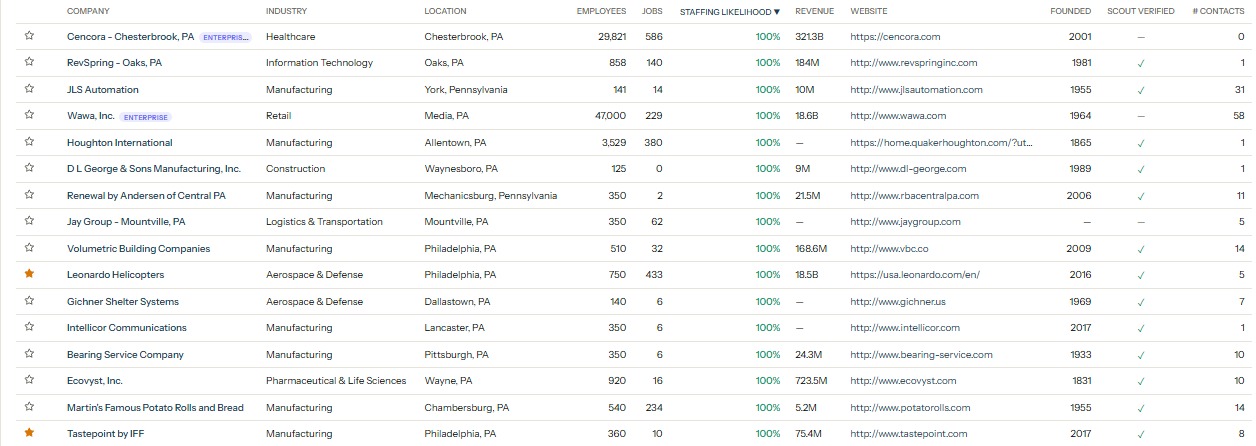
This is the problem myScout was built for. Every company gets a Staffing Likelihood Score from 0 to 100, with its open jobs and the decision makers who buy staffing on the company page. So the question "is this city worth it?" turns into a list you can sort.
5. Culture is not set once. He rebuilt his twice.
We talked about why Ronnie rebuilt his company culture twice. Growth changes a firm. The culture that works for a small team in one office does not automatically survive multiple cities, multiple companies and two recessions.
What it means for you: if your best recruiters are leaving, or your new hires do not act like the people who built the place, the culture you have is not the culture you think you have. Fixing it on purpose beats watching it drift.
6. AI does not replace what great recruiters actually do
We also got into AI. Ronnie's view, per the episode notes, is that AI is not replacing what great recruiters actually do. I agree. AI should take the research and the busywork off the desk so your people spend their day on conversations and judgment, which is the part a client pays for.
A scenario from the desk
Say you run an IT staffing firm in one city and you are thinking about a second office two states away. You know three people there. Your gut says go.
Do it Ronnie's way instead. Before you sign a lease, pull the companies in that metro ranked by how likely they are to use staffing, look at how many have open IT roles right now, and see who approves the agency at the top 50. If the list is thin, you just saved a year and a salary. If it is deep, your first salesperson starts day one with a territory, not a phone book.
Questions to ask about your own firm
- If our biggest client froze spending tomorrow, how many other accounts are ready to pick up the slack?
- Which hours of my week are for running the company, and which are for my own desk?
- When we pick a new market, what numbers do we look at before we commit?
- Does our culture still match what we say it is, now that we are bigger?
- Is AI taking busywork off our recruiters, or adding a new tool nobody opens?
Listen to the full episode
We also covered the Mike Willis escalator story and a personal mindset shift Ronnie talked about openly. Listen to Ronnie Hollis on Out of Line. For another founder's view from the show, read how Steven Meisels grew SM Staffing to 50 states, and for a plan to grow your own firm, read proven methods for staffing agency growth.
Want your team calling the companies that actually use staffing? Start now, or book a demo and we will look at your territory with you.
Frequently asked
Who is Ronnie Hollis?
What does Prestige Staffing do?
What is the difference between a staffing founder and a staffing CEO?
How do staffing firms pick a new city to expand into?
Where can I listen to the Ronnie Hollis episode?
Book a demo.
We start with your company: how you sell, who you want to win, and where you want to grow. Then we show you exactly how myScout fits that. No canned walkthrough.
Do I need a demo first?
No. Start now and book a demo any time, before or after you buy.
How much is it?
Scout Pro is $199 and Scout Signature is $299, per user a month. Month to month, or pay annually and get 2 months free.
Do credits expire?
No. Unused credits carry forward as long as your plan is active.
We have 20 or more salespeople.
That is Enterprise, priced around your team size. Contact us and we will build it with you.