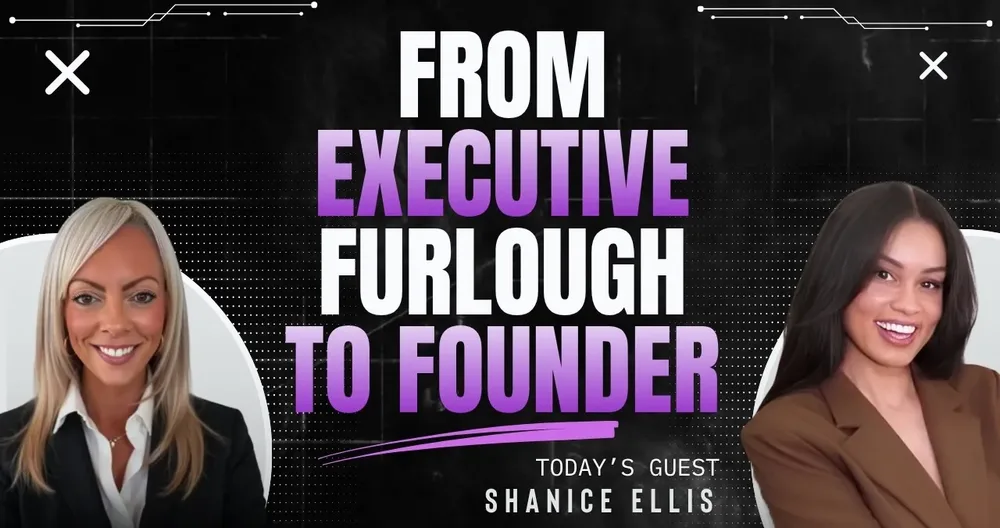
Ep. 12 of Out of Line with Tiffany Scott, with Shanice Ellis.
Shanice Ellis started her own executive search firm right after a major life change upended everything, and she was raising her daughter on her own. Three years later, she runs a boutique firm on both sides of the Atlantic, with a presence in Austin and, more recently, New York.
Episode 12 is one of the most honest conversations we've had about the first few years of running your own shop. It was messy and unstructured, and it still worked. Shanice also has a very specific playbook for breaking into a market where nobody knows your name.
Shanice is the founder of Shelby Staffing Group, an executive search firm based in the UK. She started in office support recruiting, which she describes as every industry and every building. Now she focuses on executive search for roles like VPs, directors, CIOs, CROs, CTOs, and CFOs. Her firm launched a tech arm with US-based partners, and she has been building her executive search presence in the US market.
When I asked how she decided to start a business in the middle of a life upheaval, Shanice said it was partly impulse, and mostly about her daughter. If she'd only thought about herself, she would have gone to work for another employer. She also knew what agency recruiting really demands.
"you're not going to bill anything if you just turn your phone off and leave at 5pm."
For a new recruiter who has to prove themselves fast, she says, there aren't many boundaries. Owning the business gave her control over her own schedule. If you're trying to keep good recruiters, take that seriously. Flexibility is a retention tool, and plenty of top performers leave to get it.
This is the strategy I'd steal. When Shanice expanded into the US, she didn't start cold calling. She built the candidate pool first, through networking and partnerships.
"I didn't want to go and do business development selling anything or selling myself and the organization as somebody that didn't really know what they were doing"
At the executive level, she points out, clients wouldn't give her the time of day without candidates. So she networked, built partnerships, and then had something real to bring to clients, introduced through email, marketing, and newsletters. If you're opening a new vertical or a new city, lead with talent the market already wants.
Shanice flew to Austin because it's a tech hub, and she partnered with recruiters who had come from larger companies' internal tech recruiting teams and wanted their independence. She learned from them, joined their meetings, and was honest about what she could deliver. It's a lower-risk way into a market than hiring a full team on day one. Her US partners focus on IT, while she builds executive search. Each side does what it knows best instead of everyone trying to cover everything.
Shanice's early years were all over the place, recruiting across every type of industry. That breadth also gave her a lifeline of clients she still works with. A candidate she placed years ago came back and introduced her to their CEO, who had flown in from Italy. After two meetings, she won a retainer that kept her going for months, and she delivered before the deadline.
She also does what she calls aftercare: staying in touch with candidates after they've been placed. When she's in Austin, she wants to have the coffee in person.
When I asked what makes partnerships work, she didn't hesitate.
"I think it's honesty, again, honesty and relationships all around candidates, clients and staff, partners, whoever is just being honest what you can and what you can't do."
In first conversations with a potential partner, she shares the backstory, the goal, where she wants to get to, and how they could work together, without giving too much away.
Shanice told me about candidates who'd had bad experiences with larger firms. They couldn't reach anyone, or the consultant had disappeared mid-process.
"in some cases, it's like a conveyor belt of consultants, staff, in and out."
When a consultant misses their numbers and leaves, the candidate ends up walking the new consultant through their own search. She chooses to stay small and personal, and she sells that consistency as a strength.
If you're moving into a new market or vertical, list ten candidates you could bring to a client there before you make a single sales call. Then make a list of everyone you've placed in the last three years and reach out to five of them this month, just to check in. Some of your best leads are already in that list.
Find Shanice at Shelby Staffing Group: shelbystaffinggroup.com
Shanice wins by showing up with something the client actually needs. Knowing which companies are hiring for the roles you can fill is the other half of that, and it's what myScout is built for.
Get started today. See which companies actually use agencies, who owns the decision, and how they want to be approached.
Get Started →We start with your company: how you sell, who you want to win, and where you want to grow. Then we show you exactly how myScout fits that. No canned walkthrough.
No. Start now and book a demo any time, before or after you buy.
Scout Pro is $199 and Scout Signature is $299, per user a month. Month to month, or pay annually and get 2 months free.
No. Unused credits carry forward as long as your plan is active.
That is Enterprise, priced around your team size. Contact us and we will build it with you.